China Just Shut Down Solana's Shanghai Event: PBOC Investigates as SOL Crashes Below $90 — 3 Scenarios That Decide $70 or $100
China's central bank halted Solana's Shanghai event and opened an investigation as SOL crashed 7% below $90 to a two-month low. With $143.7M in October ETF outflows and a death cross forming, here are the 3 scenarios that decide whether SOL falls to $70 or reclaims $100.

China's central bank just shut down Solana's flagship event in Shanghai — and opened an investigation into the people behind it. Solana (SOL) crashed 7% on the news, falling below $90 to its lowest price in two months, as traders rushed to work out whether this is a one-day headline or the start of a much bigger problem for the world's sixth-largest cryptocurrency. The answer matters: SOL is now sitting exactly on the trendline that has held it up since June, and the next daily close decides whether the token falls toward $70 or fights back toward $100.
The People's Bank of China (PBOC) confirmed on Friday, November 6, that it had halted the Solana Accelerate China 2026 event in Shanghai before it began and opened an investigation into the companies and individuals behind Solana's activities in China. The central bank communicated the move through Financial News, the newspaper it operates, and said it coordinated with local financial regulators, police and market supervisors to stop the event.
What Exactly Happened in Shanghai
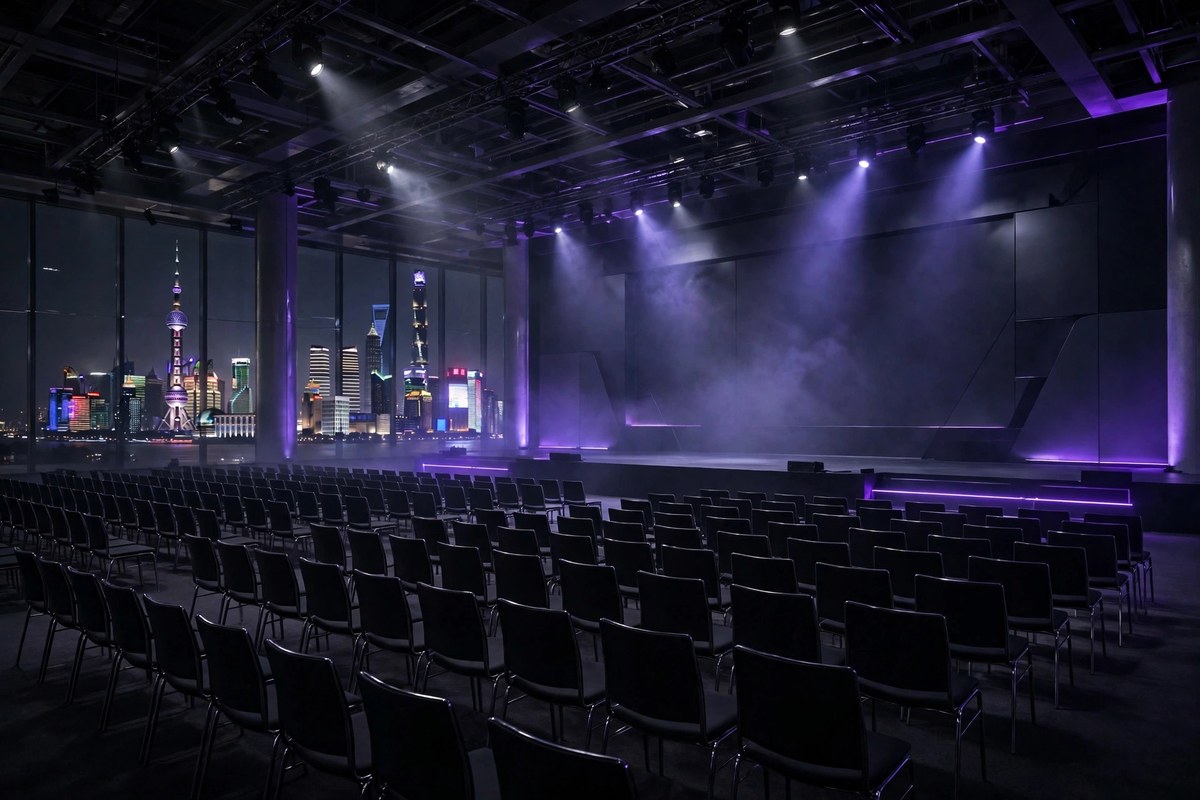
The Solana Accelerate China 2026 event was scheduled for October 16 at the Shangri-La Hotel in Shanghai. It never happened. According to the PBOC's statement, authorities stopped the event before it began, and the investigation will now target the specific companies and individuals involved in promoting Solana in China — including, the central bank said, domestic firms used to run high-profile advertisements for the brand and the coin.
The PBOC gave two reasons for the intervention. First, SOL is classified as a virtual currency. Second, the Solana network provides the technology used to issue and trade tokens, including Tether's USDT stablecoin. Both activities are considered illegal financial operations under a notice issued in February 2026 by eight Chinese agencies, which also prohibits overseas firms from offering crypto services to mainland users without explicit approval. The central bank did not name any specific companies, individuals or penalties in its announcement — which is precisely what makes the next few weeks so uncertain for SOL holders. Full details of the statement are in The Currency Analytics' report on the PBOC investigation.
This is not Solana's first run-in with Chinese authorities. In October 2025, officers questioned the Solana Accelerate APAC event in Shenzhen, and organizers subsequently cut a hackathon session. Mainland China has banned crypto trading since 2021, and the PBOC framed the current action as a continuation of that policy. But there is a meaningful difference: back then, Beijing banned trading; now it is investigating the promotion of a specific blockchain and the firms that advertise it — a wider net, and the reason this story matters beyond a single cancelled conference.
Why China Moved Now: A Timeline of Escalation
To understand why Beijing acted against Solana specifically, it helps to see how the pressure has built up over the past five years:
| Date | What happened | Why it matters |
|---|---|---|
| September 2021 | China bans all crypto trading and mining | Sets the legal baseline: crypto activity is illegal on the mainland |
| October 2025 | Police question Solana Accelerate APAC event in Shenzhen; hackathon session cut | First warning shot aimed directly at Solana's events in China |
| February 2026 | Eight agencies issue a notice banning overseas firms from offering crypto services to mainland users | Gives regulators the legal tool used against Solana this week |
| 2026 | Party anti-corruption directive names virtual currency | Signals the crackdown is a political priority, not just a financial one |
| October 16, 2026 | Solana Accelerate China 2026 scheduled at Shanghai's Shangri-La Hotel — halted before it began | The event Solana planned as its China showcase never opens |
| November 6, 2026 | PBOC confirms the halt and opens an investigation into the companies and individuals involved | SOL falls 7% to below $90, a two-month low |
The pattern is escalation, not a one-off. Each step has been more targeted than the last, and the February 2026 notice is the key document: it explicitly covers overseas firms serving mainland users, which is exactly how a global blockchain network operates. If the investigation produces named penalties, the market impact could extend well beyond a single day's sell-off.
SOL Price: The $90 Line Just Broke — and It Matters More Than It Looks
SOL traded at $90.05 when the PBOC news broke, down 7% in 24 hours, and quickly slipped below the psychological $90 level to around $89.65 — its lowest price in two months. The token has now fallen about 25% from its late-September high near $124, and Friday's drop extends a losing streak into a sixth consecutive week.
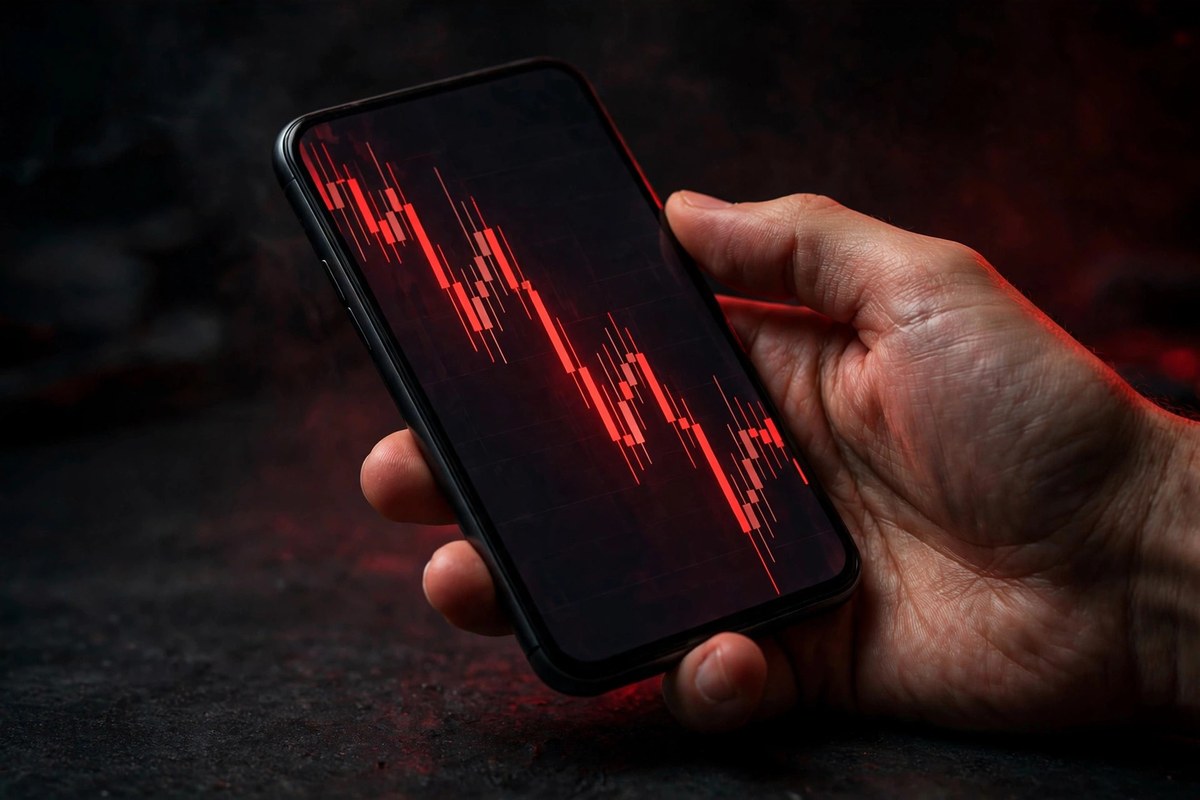
The technical picture is genuinely ugly. SOL is trading below its 50-day, 100-day and 200-day exponential moving averages. The 200-day EMA sits near $98 to $99.62, the 50-day EMA at $103.12 to $103.81, and the 20-day EMA around $100.09. The daily RSI reads roughly 26 to 29.5, below the 30 level traders treat as oversold — which sounds like a buying signal until you remember that oversold can stay oversold for weeks in a downtrend. Worse, the shorter moving averages are threatening to cross below the longer ones, which would form a death cross, a bearish pattern that tends to accelerate selling once it prints.
Here are the levels that decide what happens next:
- Immediate support at $89 to $91: the June trendline and the lower Bollinger Band at $91.39. Holding here keeps the range alive.
- Next support at $87.21: the horizontal level below the trendline. A decisive close under it opens the way down fast.
- Major support at $80, then $70.58: the August 1 low. Invezz's technical analysis flags $70.58 as the target if $87.21 fails.
- Immediate resistance at $95 to $96: the first hurdle for any bounce.
- Major resistance at $98 to $100: the 200-day EMA and the round-number level. A daily close above $98.04 would be the first sign of recovery.
- Trend reversal at $103 to $104: the 50-day EMA cluster. SOL needs a close above this zone, with volume, to confirm a broader reversal.
The ETF flows make the picture worse. US spot Solana ETFs lost $143.71 million in October — their first monthly outflow since June, the largest on record, and the end of three straight months of inflows that brought in $479.77 million between July and September. The week of October 26 to 30 alone saw $71.47 million leave, the biggest weekly withdrawal since launch. Flows paused at zero on November 2 and 3, but Thursday brought another $1.18 million in net outflows. Total net assets in the funds have fallen to $1.40 billion from $1.91 billion, a drop of about 27%. Cumulative net inflows since launch still stand at $1.47 billion, so institutions have not abandoned SOL entirely — but the direction of travel is unmistakably negative. CoinEdition's November outlook puts the first-half-of-November range at $88 to $98, with a daily close below $90 exposing the $88 floor.
Derivatives traders are not helping either. SOL futures open interest fell 8% in 24 hours to $5.38 billion, and long positioning is crowded at 75.6% — a concentration that risks forced liquidations if the price falls further. Add in the fact that the hackers behind the $6.3 billion Binance theft have been swapping stolen SOL for Bitcoin — 486,970 SOL worth about $46.4 million moved through Relay, with more sales expected — and SOL has three separate sources of selling pressure hitting at once: a central-bank investigation, ETF redemptions, and hackers liquidating stolen coins. We tracked the hacker selling in Binance Hacker Is Swapping 970,522 SOL for Bitcoin: $95.9M, 3,000 Transfers, 1,000 Wallets — Why SOL's $90 Line Matters Now.
The broader market is no refuge. Bitcoin fell 5.5% to about $76,100 on Thursday as US tech stocks plunged — the Nasdaq dropped 5.52% and the S&P 500 fell 4.35% — and more than $1.26 billion in crypto positions were liquidated in 24 hours. Ethereum fell 7.7% to $2,238, and the Crypto Fear and Greed Index sits at 28 to 32, firmly in Fear. SOL is falling with the market — but it is falling harder than the market, and the PBOC investigation is why. For the full market picture, see Bitcoin price today: BTC reclaims $76K despite $430M ETF outflows on crypto.news.
3 Scenarios for SOL: $70, $90 or $100
Nobody can predict what Beijing does next, but the price levels give us a clear map of what each outcome looks like. Here are the three scenarios that decide SOL's November:
| Scenario | Trigger | Price target | Probability read |
|---|---|---|---|
| Bearish — the investigation widens | PBOC names firms or penalties; SOL closes below $87.21; ETF outflows continue; Bitcoin breaks $75,000 | $78 to $70.58 | Rising while SOL sits under the trendline |
| Base case — headlines fade, range holds | No new penalties named; SOL holds $88 to $91; ETF flows stabilize near zero; Bitcoin steadies above $75,000 | $90 to $98, first half of November | Most likely if the news cycle moves on |
| Bullish — the scare passes fast | PBOC goes quiet; SOL closes above $98.04 (200-day EMA); ETF flows turn positive; volume surges | $100 to $104, then $110 to $115 | Needs a catalyst the market does not have yet |
The bearish scenario is the one to respect most right now. A daily close below $87.21 would confirm the trendline break, and the next real demand zone sits at $75 to $82, where SOL found support during the summer — with $70.58, the August 1 low, below that. The base case is a slow grind between $90 and $98 while traders wait for the PBOC's next move. The bullish case requires SOL to reclaim the 200-day EMA at $98.04 and then the $103 to $104 cluster — a move that needs either the investigation to fizzle out or the broader market to turn, neither of which is visible today. These are scenarios, not predictions: the levels tell you what to watch, not what will happen.
What This Means for Solana's Asia Strategy
The bigger question is strategic, not technical. Solana has spent 2026 building its institutional story: tokenized stocks, real-world assets, fast finality after the Alpenglow upgrade, and a growing footprint in Asia. Real-world assets on Solana have hit $5.12 billion, and the network just set a record of 3.3 billion transactions. None of that disappears because of one halted event — but the China strategy now has a hole in it.
China is the market Solana cannot officially have. Crypto trading has been banned there since 2021, yet Chinese developers, users and capital have remained deeply involved in crypto through offshore channels — exactly the grey area the February 2026 notice targets. Solana's Accelerate events were the network's way of keeping a visible presence in Asia's biggest market without a formal operation there. If the PBOC investigation leads to named penalties against the firms that organized or advertised the Shanghai event, other blockchains will read the same warning: promoting crypto in China now carries personal and corporate risk, not just a cancelled venue booking. Earlier in 2026, China's ruling party named virtual currency in an anti-corruption directive — we covered it in China Crypto Crackdown 2026: Party Names Virtual Currency in Anti-Corruption Directive — What Actually Changes — and the PBOC's move is the first time that crackdown has landed directly on a major blockchain's flagship event.
None of this means Solana is finished in Asia. The network's developer activity, transaction volumes and real-world-asset growth are real, and they are not located in Shanghai. But the PBOC has shown it is willing to act against a specific blockchain's promotion machine, and until the investigation concludes, every Solana event, partnership and advertisement touching China carries a question mark. For a full primer on how the network actually works, see our evergreen guide What Is Solana? The Complete Beginner's Guide to How SOL Works in 2026.
What Most People Get Wrong About the China–Solana Story
Three misconceptions are already spreading, and each one could cost holders money:
Myth 1: "China banned crypto in 2021, so this changes nothing." Wrong. The 2021 ban covered trading and mining. The February 2026 notice and the PBOC's investigation target promotion, events and advertising by overseas firms — a wider enforcement net aimed at the ecosystem around the coins, not just the trading. The Shenzhen questioning in 2025 was a warning; the Shanghai halt in 2026 is an escalation with an open investigation attached.
Myth 2: "SOL is just following Bitcoin down." Partly true, but incomplete. Bitcoin fell 5.5% on Thursday; SOL fell 7% and broke below $90 to a two-month low while BTC held above $76,000. The underperformance started before the PBOC news, with ETF outflows and hacker selling already pressuring the price. The investigation is an additional, SOL-specific headwind on top of a weak market.
Myth 3: "ETF outflows mean institutions have abandoned Solana." Not yet. October's $143.71 million outflow ended three months of $479.77 million in inflows, and cumulative net inflows since launch still stand at $1.47 billion. What the flows show is hesitation, not abandonment — but hesitation becomes abandonment quickly if the PBOC investigation produces penalties.
What SOL Holders Should Do Now: A 5-Point Checklist
If you hold SOL, the next few days are about discipline, not panic. Here is a practical checklist:
- Watch the daily close, not the intraday wick: the $89.83 trendline and $87.21 level only matter on a daily close. Intraday dips below them have been bought before — November 4 proved it.
- Check the PBOC's next statement before any new buy: the investigation named no companies or penalties yet. Any follow-up naming firms would be a fresh sell signal; silence for a week would be mildly positive.
- Track ETF flows every morning: two more days of outflows after Thursday's $1.18 million would confirm institutions are still selling; a return to inflows would be the earliest sign the scare is passing.
- Decide your plan for $87.21 in advance: if SOL closes below it, the technical case for holding short-term weakens sharply toward $80 and $70.58. Know your exit or your buy level before the price gets there, not after.
- Move coins you are not trading off exchanges: the Binance hack showed what happens when billions sit in hot wallets. If you are holding SOL long-term, self-custody is the safer option — our guide How to Store Crypto Safely in 2026: Cold Storage, Seed Phrases and Wallet Security Explained walks through cold storage step by step, and How to Buy Solana in 2026: A Complete Beginner's Guide to Your First SOL Purchase covers buying safely if you are adding to a position.
One more thing worth saying plainly: do not buy SOL purely because the RSI is oversold. An RSI of 26 to 29 tells you the selling has been fast, not that it is finished — November 4 proved it, when oversold marked a bottom and the PBOC news broke the level two days later anyway.
Frequently Asked Questions
Why did China halt Solana's Shanghai event?
The People's Bank of China said promoting Solana violates Beijing's crypto regulations because SOL is classified as a virtual currency and the Solana network supports issuing and trading tokens, including USDT. Both are considered illegal financial operations under a February 2026 notice from eight Chinese agencies, which also bars overseas firms from offering crypto services to mainland users without approval.
Is Solana banned in China now?
Crypto trading has been banned in mainland China since 2021, and this action does not change that legal position — it enforces it against a specific target. The PBOC halted one event and opened an investigation into the companies and individuals behind Solana's promotion in China. No SOL-specific ban or penalty has been announced yet.
How far could SOL fall if the $90 level breaks?
If SOL closes below the $87.21 support level, technical analysis points to $80 as the next stop, then $70.58 — the low last tested on August 1. The June trendline near $89.83 is the first line of defence; a daily close below it would confirm the breakdown. These are technical levels, not guarantees. Invezz's November 6 analysis flags the same $87.21 level and the $70.58 target if it fails.
Are Solana ETFs still seeing outflows?
Yes, but the pace has slowed. US spot Solana ETFs lost a record $143.71 million in October and $71.47 million in the week of October 26 to 30. Flows were zero on November 2 and 3, then turned to a $1.18 million outflow on Thursday, November 5. Cumulative net inflows since launch remain positive at $1.47 billion.
Should I buy SOL at $90?
That depends on your time horizon and risk tolerance, and this article is not financial advice. Short-term, SOL is below all major moving averages with a possible death cross forming and ETF outflows continuing. Long-term, the network's fundamentals — speed, low fees, real-world-asset growth — are intact. Most traders are waiting for either a daily close back above $98.04 or a confirmed hold of the $88 to $91 zone before adding exposure. If you do buy, our staking guide Solana Staking Explained: How to Stake SOL and Earn Rewards in 2026 explains how to earn yield on SOL you plan to hold.
Conclusion
China's central bank just did something it had never done before: it halted a major blockchain's flagship event in Shanghai and opened an investigation into the people promoting it. SOL's 7% crash below $90 is the market's first verdict, and the technical damage is real — the token sits on a trendline that has held since June, below every major moving average, with ETF outflows and hacker selling already weighing on the price. But the story is not finished. The PBOC named no companies and no penalties, which means the next statement matters more than this one. If the investigation fizzles, $90 will look like a buying opportunity and the path back to $98 and $100 opens up. If it widens, $87.21 breaks and $70 comes into view. Watch the daily close, watch the ETF flows, and watch Beijing — in that order.