Will China Sell 61,800 Bitcoin? Inside the $5.7 Billion Seizure Case and What It Means for BTC Price
A Chinese court accepted a confiscation case targeting 61,800 BTC tied to the Qian Zhimin $5.7B fraud scheme. Investors get six months to claim — here is what a state sale would mean for Bitcoin's price.

A Chinese court has accepted a confiscation case targeting one of the largest known Bitcoin hoards on earth: more than 61,800 BTC, worth roughly $5 billion at current prices, tied to an alleged $5.7 billion investment fraud run between 2014 and 2017. Investors and other interested parties have been given six months to come forward and participate in the proceedings. The development immediately raises the question every Bitcoin holder is asking: will China sell 61,800 Bitcoin, and what would that do to the BTC price?
The short answer is that a sale is far from imminent. Confiscation cases move slowly, the ownership of these coins is contested across two countries, and precedent shows that state liquidations are usually absorbed by the market over time. But the sheer size of the stash — about 0.3% of all bitcoin that will ever exist — makes this one of the biggest potential supply overhangs in crypto history. Here is what actually happened, who the coins belong to according to investigators, what history says about state Bitcoin sales, and what to watch next.
What Just Happened: China's Court Accepts the 61,800 BTC Confiscation Case
According to reporting on October 22, a Chinese court accepted a case to recover assets linked to an alleged CNY 40.3 billion (about $5.7 billion) fundraising fraud operated by Qian Zhimin between 2014 and 2017. The assets named in the proceedings include more than 61,800 Bitcoin, 72,700 Bitcoin Cash, 3.6 million XRP, and additional cryptocurrencies alongside cash and property.
The court set a six-month window for investors and other interested parties to participate in the confiscation proceedings — a standard mechanism in Chinese asset-recovery cases that lets victims file claims before the state disposes of seized property. Nothing has been sold. Nothing has even been formally confiscated yet. But the acceptance of the case is the legal starting gun for a process that could end with Beijing controlling billions of dollars in cryptocurrency.
For context, 61,800 BTC at Bitcoin's current price of around $82,000–$84,000 is worth just over $5 billion — more than the entire market capitalization of most large-cap altcoins. To put it in everyday terms, it is roughly equivalent to several weeks of typical spot Bitcoin ETF trading activity hitting the market at once if it were ever liquidated in a hurry.
Who Is Qian Zhimin and the $5.7 Billion Fraud Behind the Bitcoin
Qian Zhimin (also known as Yadi Zhang in the UK proceedings) is alleged to have run a massive fundraising fraud in China between 2014 and 2017, collecting the equivalent of 40.3 billion yuan from investors — money that investigators say was funneled into Bitcoin as the cryptocurrency's price took off.
This is not a new investigation. The same stash sits at the center of a long-running UK legal battle: British police seized the coins in London as part of a money-laundering investigation, and a UK court has been working through who owns them. As we reported earlier, a UK court ruled that Chinese law would decide the ownership question — a finding that effectively opened the door to Beijing pursuing the assets through its own courts. This week's acceptance of the confiscation case is the next step in that chain.
The fraud's victims are believed to number in the hundreds of thousands. Between 2014 and 2017, Bitcoin's price rose from a few hundred dollars to nearly $20,000 — which is precisely why investigators say the allegedly illicit proceeds were converted into BTC. The appreciation that made the fraud profitable is also what turned the seized stash into one of the largest state-held crypto fortunes in the world.
The Same Stash, Two Countries: Why the UK Is Also Fighting for These Coins
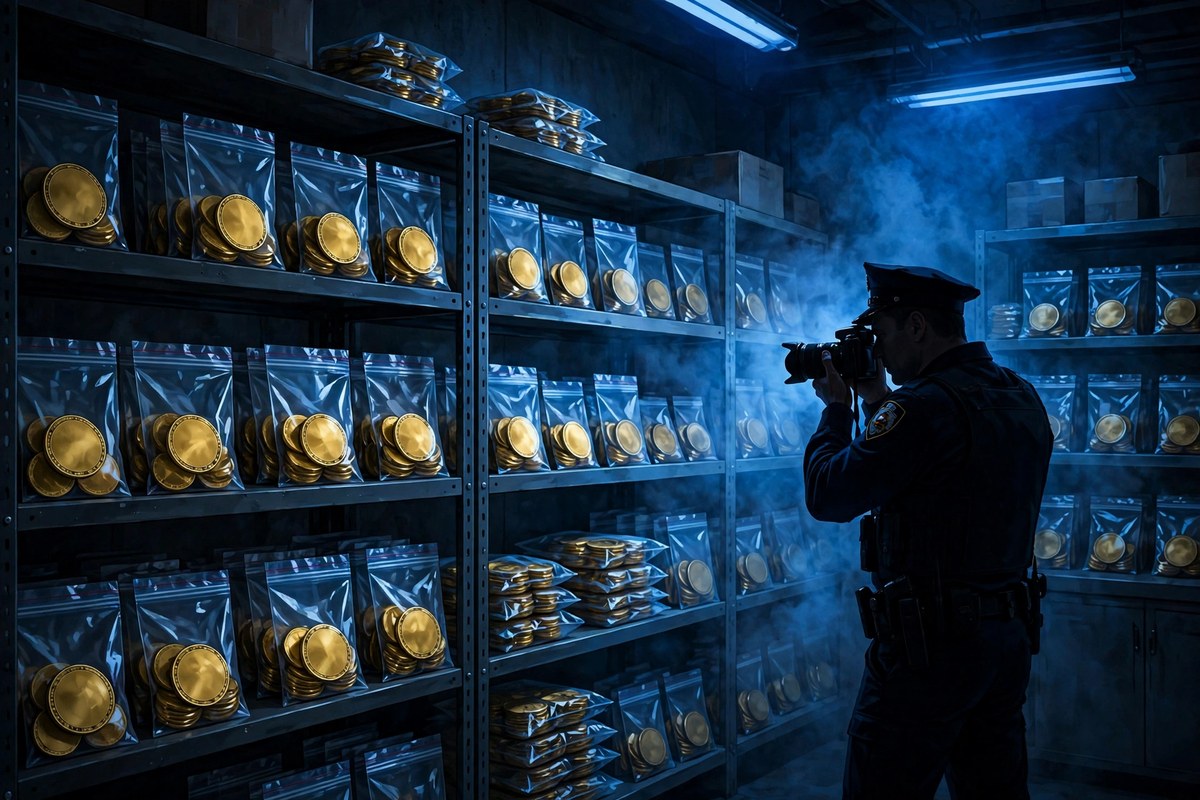
The ownership fight is genuinely complicated. The coins were physically seized in the United Kingdom, where Qian Zhimin was living and where British police arrested associates in a money-laundering probe. Under the UK's Proceeds of Crime Act, British authorities can seek civil recovery of assets they believe are criminal proceeds — regardless of where the underlying crime took place.
At the same time, China claims the assets as proceeds of a fraud committed against Chinese investors, and now has its own confiscation proceedings underway. The UK court's ruling that Chinese law governs the ownership question was significant: it signaled that London may ultimately hand the assets to Beijing, or at least defer to China's determination of who the victims are.
This cross-border tug-of-war matters for Bitcoin markets because it creates a powerful incentive for delay. No state sells assets whose ownership is still being litigated. The UK forfeiture process alone can take years, and adding a parallel Chinese confiscation case with a six-month claims window only stretches the timeline further. For traders worried about 61,800 BTC hitting exchanges next week, that legal friction is the single most important fact in this story.
Will China Actually Sell 61,800 Bitcoin? The Precedents
States that seize Bitcoin almost always sell it eventually. The question is how, how fast, and how much the market notices. History gives us three useful case studies.
Germany's Saxony sale (2024): the market-moving precedent. In the summer of 2024, the German state of Saxony sold roughly 50,000 BTC seized from the operators of a movie-piracy site, worth about $3 billion at the time. The sales were executed over several weeks through exchanges and market makers, and Bitcoin fell from roughly $60,000 to the low $50,000s during the selling — a drop of around 15–20% that traders still cite as the textbook example of sovereign supply hitting the market. Notably, the market recovered fully within months, and Bitcoin went on to make new all-time highs later that year.
The US Marshals model: slow auctions, no drama. The United States has been selling seized Bitcoin for over a decade — Silk Road coins, Bitfinex hack proceeds, and others — typically through periodic auctions to institutional bidders. The government's auction format deliberately avoids market disruption: buyers bid for whole blocks of coins off-exchange. The US approach shows that large state sales do not have to mean market carnage.
The PlusToken overhang: China's earlier mega-stash. China previously seized roughly 194,000 BTC from the PlusToken Ponzi scheme, and a 2020 court ruling ordered the funds confiscated to the state. On-chain analysts later identified patterns suggesting portions were liquidated through over-the-counter desks over an extended period. The market impact was diffuse rather than dramatic — a steady drip rather than a fire sale.
If China follows its own PlusToken playbook — and there is every reason to think it will, given Beijing's demonstrated preference for quiet OTC liquidation over exchange dumps — the market impact of the 61,800 BTC could be spread over months or years rather than concentrated in a single shock.
What a 61,800 BTC Sale Would Mean for Bitcoin's Price: The Math
Let's do the supply math, because the headline number sounds scarier than the reality. Bitcoin's daily spot trading volume on major exchanges routinely runs into the tens of billions of dollars. The entire 61,800 BTC stash is worth about $5.1 billion — a huge sum, but roughly equivalent to a single busy day of global Bitcoin trading.
The German precedent is the closest comparison: 50,000 BTC liquidated over weeks coincided with a 15–20% drawdown, though that sale also happened during a period of broader market weakness and ETF outflows, so it is impossible to isolate the state-selling effect. Bitcoin was trading in the $81,000–$84,000 range this week after bouncing off support near $82,500, and institutional demand looks healthier than it did in mid-2024: US spot Bitcoin ETFs drew $1.08 billion in just three days recently, with a single $527 million day marking the biggest inflow since September.
Several factors argue against a Saxony-style price shock here:
- Years-long timeline. Between the six-month claims window, the UK forfeiture process, and the near-certainty of appeals, any sale is unlikely before late 2027 at the earliest — and possibly much later.
- OTC liquidation absorbs supply quietly. If Beijing sells through over-the-counter desks to institutions, the coins may never touch public exchange order books at all.
- Demand is structurally different now. Spot ETFs, corporate treasuries, and sovereign buyers have deepened the bid for large Bitcoin blocks since 2024.
- The market already knows about the stash. Unlike a surprise hack or an unknown whale wallet, the 61,800 BTC has been publicly discussed for years. Markets price in known supply overhangs; they panic about unknown ones.
None of this means a state sale would be a non-event. A $5 billion block of Bitcoin entering circulation is a real supply shock, and in a fragile market it could amplify downside. But the conditions that make a sudden dump most dangerous — surprise, exchange-based selling, weak demand — are all absent here.
The Six-Month Claims Window: What Victims and Investors Should Know
The most immediate practical consequence of this week's development is the six-month window for claims. In Chinese confiscation proceedings, this is the period during which alleged victims of the underlying fraud can come forward, register their claims, and potentially receive restitution if the assets are confiscated.
A few things to understand about the process:
- Narrow scope. It applies to the Qian Zhimin fraud case, not to Bitcoin investors generally. If you did not invest in the scheme that ran from 2014 to 2017, the proceedings do not concern you.
- Documentation will be required. In comparable Chinese asset-recovery cases, claimants must provide investment records, identity documents, and evidence of their losses.
- The window is strict. Missing the participation deadline typically means forfeiting any claim to restitution. Anyone who believes they are a victim should seek qualified legal counsel promptly.
- Restitution comes after confiscation. The court must first finalize the confiscation before any distribution to victims can occur — a process that can extend well beyond the six-month claims window itself.
For everyone else, the claims window is mainly a timing signal: it pushes any final resolution of the 61,800 BTC question further into the future, reinforcing the case that no coins will move anytime soon.
Why Bitcoin Markets Aren't Panicking (Yet)
Perhaps the most telling data point in this story is what Bitcoin's price is doing right now: nothing dramatic. BTC traded between roughly $81,600 and $84,800 this week, holding above the $82,500 support level that analysts identified as the key line in the current market structure. The Fear and Greed Index sits at 68 — firmly in "greed" territory.
Markets are looking past the headline for good reasons. First, as discussed, the legal timeline makes any sale a multi-year prospect. Second, the demand side of the equation has never been stronger: spot Bitcoin ETFs continue to absorb supply, with recent sessions showing hundreds of millions in daily net inflows, and institutional adoption of Bitcoin as a treasury and portfolio asset has deepened considerably over the past year. JPMorgan even included Bitcoin in its long-term capital market forecasts for the first time, projecting roughly 10% annualized returns over the next decade.
Third, the macro picture that actually moves Bitcoin right now has nothing to do with seized coins. This week's price action was driven by AI-trade jitters, Nasdaq futures, oil prices climbing above $110 a barrel on Middle East tensions, and third-quarter tech earnings — the same risk-on/risk-off forces that have tethered Bitcoin to equities all year. A two-country legal fight over old fraud proceeds simply does not register against those forces.
If you are new to how Bitcoin supply and demand interact, our complete beginner's guide to how Bitcoin works explains why the 21 million supply cap makes large holder movements matter — and why steady institutional demand can absorb them.
Key Dates and What to Watch Next
This story will unfold slowly, but there are concrete milestones to monitor:
- Now through April 2027: the six-month claims window for the Chinese confiscation proceedings. Watch for reports on how many victims register claims.
- Ongoing: the UK forfeiture proceedings under the Proceeds of Crime Act. Any ruling on whether the coins transfer to China would be a major development.
- Any on-chain movement: the 61,800 BTC sits in known seized wallets. Blockchain analysts monitor these addresses constantly; any movement would be public within minutes.
- Chinese policy signals: Beijing's broader stance on digital assets will shape whether the state prefers to liquidate quickly or hold.
One more scenario worth mentioning: it is not guaranteed that the coins get sold at all. States sometimes retain seized assets for years, and the ongoing jurisdictional dispute could keep the Bitcoin frozen indefinitely. The stash has already sat untouched for years; there is no law of nature requiring that to change.
FAQs
Will China sell 61,800 Bitcoin?
Not anytime soon. A Chinese court has only just accepted the confiscation case; investors have six months to file claims, ownership is contested with the UK, and legal appeals could take years. If a sale eventually happens, precedent suggests it would likely be done gradually through over-the-counter desks rather than dumped on exchanges.
How much is 61,800 Bitcoin worth?
At current prices of around $82,000–$84,000 per Bitcoin, 61,800 BTC is worth roughly $5.1–$5.2 billion — about 0.3% of Bitcoin's maximum 21 million supply.
Who does the Bitcoin belong to?
That is exactly what the courts are deciding. Chinese investigators say the coins are proceeds of a CNY 40.3 billion fundraising fraud allegedly run by Qian Zhimin from 2014 to 2017. The coins were seized in the UK, and a British court ruled that Chinese law would determine ownership — but UK forfeiture proceedings are also underway.
What happened when Germany sold 50,000 Bitcoin in 2024?
The German state of Saxony sold roughly 50,000 seized BTC over several weeks in mid-2024. Bitcoin fell about 15–20% during the selling period, though it recovered fully within months and later reached new highs.
Could this crash Bitcoin's price?
A sudden, exchange-based sale of the full 61,800 BTC would be a genuine supply shock. But the realistic scenario — a gradual, years-away liquidation, likely through OTC desks, into a market with strong ETF and institutional demand — looks manageable. BTC is holding above $82,500 support with the Fear and Greed Index in greed territory.
How can I tell if the seized Bitcoin starts moving?
Bitcoin's blockchain is public. The seized coins sit in known wallets that blockchain analysts monitor continuously. If any of the 61,800 BTC moves, on-chain tracking services and crypto media will report it within minutes.
Conclusion
The acceptance of China's confiscation case is a significant legal development, not a market emergency. The 61,800 BTC at the heart of the Qian Zhimin fraud case is now the subject of formal proceedings with a six-month claims window, layered on top of an already-running UK forfeiture battle. That legal reality all but guarantees the coins stay frozen for a long time — and when they eventually move, history suggests the sale will be slow, quiet, and absorbed by a market with far deeper institutional demand than it had during Germany's 2024 sale.
For Bitcoin investors, the takeaway is familiar: sovereign supply overhangs make good headlines and poor reasons to panic. The forces that will actually determine Bitcoin's price over the next year — ETF flows, Federal Reserve policy, tech earnings, and geopolitical risk — are the same ones moving it today. Keep an eye on the seized wallets, note the milestones, and stay focused on the fundamentals. And if you hold your own Bitcoin, make sure it is secured properly — our guide to the best crypto wallets for beginners covers how to keep your coins safe from the kinds of fraud cases that produce seizures like this one.