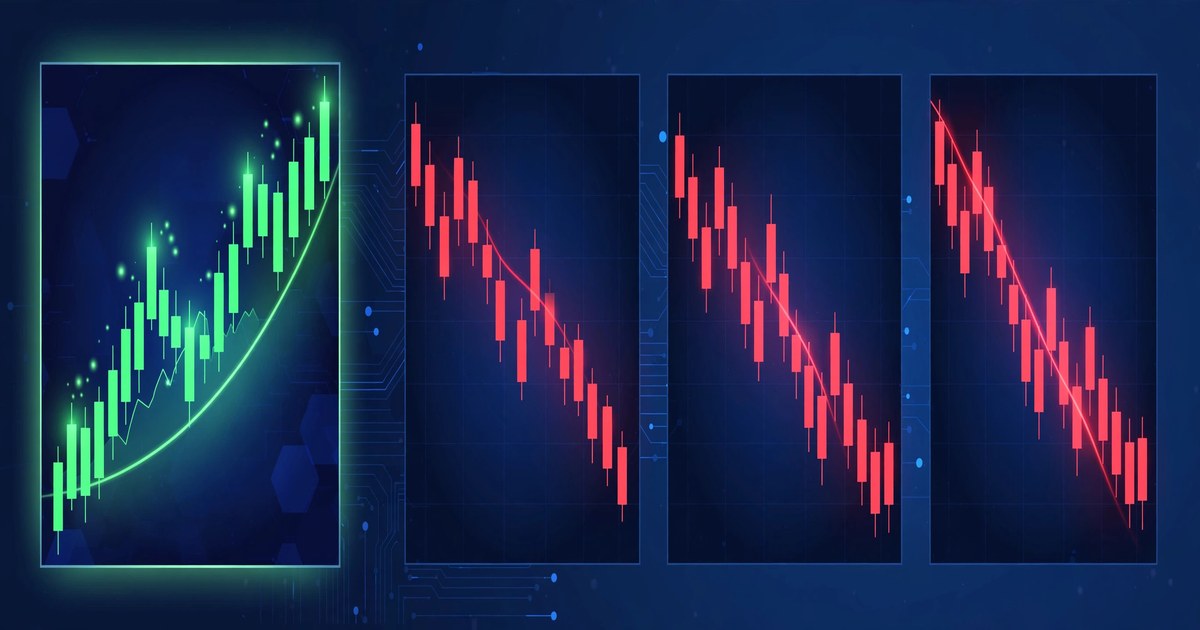
Bitcoin's November 4 Treasury Refunding: The Overlooked Event That Could Break the Slump — 3 Scenarios From $73,000 to $82,000
While everyone watches Binance's reopening and Tuesday's midterms, Wall Street veteran Jordi Visser says the real Bitcoin catalyst lands Wednesday, November 4: the Treasury's quarterly refunding. Real 10-year yields near 250 basis points are crushing risk assets — and the last time Treasury doubled long-bond buybacks, Bitcoin jumped 21% in 72 hours.

Bitcoin Is Stuck — and the Catalyst Nobody Is Watching Lands on November 4
Bitcoin is trading near $77,500, down about 39% from its roughly $126,000 peak of October 2025, and every trader seems to be watching the same two events: Binance's planned reopening of withdrawals on Sunday, November 1, and Tuesday's US midterm elections. But Wall Street veteran Jordi Visser says the event that could actually break Bitcoin out of its slump is one almost nobody in crypto is talking about: the US Treasury's quarterly refunding announcement on Wednesday, November 4. His argument is blunt — with real 10-year yields near 250 basis points acting as "a major drag on crypto," a Treasury decision to borrow shorter and buy back more long-dated debt could ease the pressure crushing risk assets. The last time Treasury doubled its long-bond buyback limits in August, Bitcoin jumped about 21% in just 72 hours.
This is not a prediction that Bitcoin will repeat that move. It is a map of the one scheduled event this week that can change the funding conditions behind every Bitcoin trade — and the three scenarios, from $73,000 to $82,000, that follow from it. If you hold Bitcoin, trade it, or are deciding whether to buy the dip, November 4 matters more than the headlines suggest.
Why Yields Are Bitcoin's Real Enemy Right Now
To understand why a boring government debt announcement moves Bitcoin, start with the number Visser keeps repeating: roughly 250 basis points of real yield on the 10-year Treasury. That means inflation expectations near 2.5% subtracted from a 10-year yield near 5% leaves a real return of about 2.5% for holding the safest asset on earth. When investors can earn that much doing nothing, speculative assets have to work much harder to justify their risk — and Bitcoin, which pays no yield and swings violently, is the first thing that gets sold.
The evidence is in the tape. Bitcoin has tracked semiconductor stocks almost one-for-one over the past six weeks, according to Visser, and both have been dragged down as long-term yields climbed to multi-decade highs. The 10-year yield touched its highest level since April 2002 on October 1, and the 30-year yield closed at 5.60% on October 9, near a 24-year high. On that same October 1, Treasury used its full $6 billion bond buyback limit to retire older long-term debt — a sign of how seriously officials take the strain in the long end of the market.
None of this is a crypto story on the surface. But Bitcoin's price is, in large part, a story about the cost of money. When real yields are high, the discount rate applied to every future cash flow rises, leveraged trades get more expensive, and the "risk-on" trade that carried Bitcoin to $126,000 loses its funding. When yields fall, the reverse happens — and that is exactly what the November 4 refunding can trigger.

What the November 4 Refunding Actually Decides
The quarterly refunding is the Treasury's announcement of how much debt it will sell, and at which maturities, for the coming quarter. For Bitcoin traders, three decisions inside it matter:
1. Will Treasury cut long-bond sales? Citigroup expects Treasury to cut $3 billion from both 20-year and 30-year bond sales and shift that borrowing into short-term bills. Citi even says the 20-year bond could be cancelled outright. Fewer long bonds for sale means less supply pressing down on long-bond prices — which means lower long-term yields.
2. Will buybacks expand again? Treasury already doubled the maximum size of its long-end liquidity-support buybacks from $2 billion to at least $4 billion per operation, effective September 9 through November 4. The word "at least" was deliberate: it left room to go bigger. Five long-end operations between September 10 and October 15 already accepted $27.265 billion of bonds against a $30 billion maximum — a 90.9% take-up rate that shows real demand to sell long bonds back to the government. On October 27, Treasury bought back the full $6 billion maximum of 20- to 30-year securities in a single operation.
3. How much borrowing shifts to bills? Bills are cheaper today, but they mature within a year, so the government must refinance them constantly at whatever rate investors demand. A heavy shift to bills would be a short-term relief valve for yields — and a longer-term refinancing risk. Markets will read the mix, not just the headline.
The announcement lands on Wednesday, November 4, with a tentative buyback operation for 10- to 20-year securities scheduled the same day at 1:40–2:00 pm ET, and another for 1-month to 2-year securities on November 5. For traders, that makes November 4 a two-part event: the statement in the morning, and the market's verdict in the afternoon.
The August Precedent: 21% in 72 Hours
Skeptics should note that this is not theory — it happened three months ago. On August 19, Treasury confirmed it would at least double the ceiling on certain long-end buybacks. Bitcoin jumped roughly 8.7% immediately after the announcement, climbing from around $64,000 toward $69,750–$71,000, then rallied further to top $80,000 by August 25. Visser's summary of the episode is even punchier: after Treasury said in August it would double long-term bond buybacks from $2 billion to at least $4 billion per operation, Bitcoin went up about 21% in just 72 hours.
That episode also shows why the mechanism works. Buybacks replace long-duration government liabilities held by investors with short-duration ones, and they give holders a route to sell older, illiquid bonds. When the government buys its own long bonds, it supports their prices — which pushes their yields down. Lower long yields ease financial conditions across the board, and risk assets from semiconductors to Bitcoin tend to reprice higher.
Two honest caveats. First, correlation is not causation: the August rally also had other drivers, and the Treasury's own $32 trillion-plus of debt held by the public dwarfs a $4 billion-per-operation buyback program. Second, the backdrop is worse now than in August — Bitcoin has since fallen from $126,000 to near $77,000, US spot Bitcoin ETFs lost $643.33 million on October 30 alone, and leveraged liquidations hit $1.53 billion during the decline. A refunding surprise would be pushing against a much heavier tape.
What Most People Get Wrong About the Refunding
Myth 1: "The Fed decides everything, Treasury is a sideshow." Wrong. The Fed sets the short-term policy rate; the Treasury decides the supply of bonds at every maturity. When Treasury floods the market with long bonds, long yields rise no matter what the Fed does. When it buys them back or borrows short instead, long yields fall. For Bitcoin, which trades against the 10-year yield more than against the Fed funds rate, Treasury's mix decision is arguably the bigger lever this week.
Myth 2: "Buybacks are stealth QE." Not quite. Quantitative easing creates new bank reserves to buy bonds; buybacks are funded by issuing other debt, usually bills. The net effect on liquidity is smaller and more targeted. But the direction is the same — less long-bond supply, lower long yields — which is why Arthur Hayes tied Bitcoin's August run directly to the buyback decision in his essay "Same Same But Different."
Myth 3: "If November 4 is dovish, Bitcoin moons immediately." The August precedent says the move can be fast, but the current setup says it may not be. Bitcoin sits just $1,000 above its 200-day average near $76,000, below its 50-day average near $80,000, with a daily RSI of 34 — weak, but not yet oversold. A dovish refunding still has to fight the Binance hack overhang, $643 million of ETF outflows, and a Fear and Greed reading of 30. Relief rallies in bearish tapes often fail at the first resistance level.
Myth 4: "This only matters to bond traders." If you hold Bitcoin in a wallet, trade it on an exchange, or own a spot ETF, the 10-year yield is already in your price. It sets the hurdle rate your Bitcoin has to beat, the cost of the leverage behind the traders on the other side of your order, and the risk appetite of the institutions deciding whether to buy the dip. Understanding the refunding is understanding one of the main inputs to your own investment.
3 Scenarios for Bitcoin After November 4
Here is how the refunding maps to price, using the levels traders are actually watching: support near $75,000 with a deeper floor near $65,000, Visser's expected retest of $73,000–$74,000, the 200-day average near $76,000, the 50-day average near $80,000, and resistance near $82,000.
| Scenario | What Treasury does | Bitcoin's likely path |
|---|---|---|
| Bull: borrowing goes short | Cuts 20- and 30-year sales, expands buybacks beyond $4 billion, shifts issuance to bills | Breaks above the 50-day average near $80,000, targets $82,000 resistance; a repeat of the August pattern would put $85,000+ in play within days |
| Base: steady as she goes | Holds auction sizes, keeps the $4 billion buyback cap, no shift in mix | Stays range-bound between $75,000 and $80,000; the market moves on to Friday's payrolls as the next catalyst |
| Bear: no relief | Signals more long-bond supply or scales back buybacks after November 4 | Loses the 200-day average near $76,000, retests $73,000–$74,000 as Visser expects, with $65,000 as the deeper floor if selling accelerates |
The bull case is the one Visser is pointing at: a refunding that trims long-bond sales eases the 250-basis-point real-yield drag, and Bitcoin — which has moved in lockstep with semiconductors — catches the same relief bid as stocks. The bear case is the mirror: if Treasury disappoints, the yield pressure that has already knocked Bitcoin 39% off its peak stays in place, and the next stop is a retest of $73,000. The base case, frankly, is the most likely single outcome — refundings usually avoid drama — but even a neutral statement removes an uncertainty that has been hanging over the market, and uncertainty removal alone can fuel a relief bounce.
The Week Around November 4: Why Timing Matters
November 4 does not arrive in isolation. It sits inside the densest macro week of the autumn for crypto:
- Sunday, November 1: Binance targets reopening deposits and withdrawals after the $6.3 billion hack — a delay would revive counterparty fears, while a smooth reopening removes an overhang.
- Tuesday, November 3: US midterm voting, plus the ISM Manufacturing PMI for October (forecast 54.7).
- Wednesday, November 4: The Treasury quarterly refunding announcement, plus a tentative $4 billion-plus buyback operation in the afternoon.
- Friday, November 6, 13:30 GMT: US non-farm payrolls — the week's other big macro release.
That sequencing matters. If Binance reopens smoothly and the midterms pass without a shock, the market enters November 4 with two uncertainties already removed — and the refunding becomes the deciding event rather than one more worry. If either disappoints, the refunding has to do heavier lifting. Either way, traders who only watch the crypto headlines will be reacting to November 4; traders who understand it will be positioned before it.
What This Means for Your Bitcoin Decision
This is not financial advice, and no single government announcement should drive an investment decision on its own. But the refunding gives holders a concrete checklist for the week:
- Watch the long-bond cut, not the headline. The number that matters is how much Treasury cuts 20- and 30-year auction sizes — Citi expects $3 billion from each. A bigger cut is more bullish for Bitcoin than any soundbite.
- Watch the buyback cap. "At least $4 billion" was the August language. If November 4 raises the cap or extends the program, that is a deliberate easing signal.
- Watch the 10-year yield, not just the BTC chart. If the yield drops after the announcement, Bitcoin's hurdle rate just fell — historically a tailwind. If it rises, the pressure stays on.
- Respect the levels. $76,000 (200-day average) is the line between a dip and a breakdown; $80,000 (50-day average) is the line between a bounce and a recovery; $73,000–$74,000 is where Visser expects a retest if relief fails.
- Do not chase a refunding spike. The August move was fast and partly retraced. If November 4 triggers a sharp rally, the disciplined move is to wait for a hold above $80,000 rather than buying the first green candle.
For longer-term holders, the refunding is also a reminder of Bitcoin's core investment case. The US government now owes more than $40 trillion, long-term borrowing costs are at multi-decade highs, and every refunding forces a choice between borrowing more, borrowing shorter, or buying back its own debt. Bitcoin, with a fixed supply schedule — the 20 millionth bitcoin was mined on March 9, 2026 — has no committee deciding how much more to create. That asymmetry is the reason Treasury debt decisions keep showing up in Bitcoin's price, and it is the reason November 4 is worth watching even if you never trade a bond.
FAQs
What is the Treasury quarterly refunding?
It is the US Treasury's quarterly announcement of how much government debt it will sell and at which maturities. The November 4, 2026 refunding will set auction sizes for 20- and 30-year bonds, the size of bond buyback operations, and how much borrowing shifts to short-term bills.
Why would a Treasury announcement move Bitcoin?
Because it changes long-term interest rates. Fewer long bonds for sale and bigger buybacks tend to push long yields down, easing financial conditions and lowering the hurdle rate for risk assets like Bitcoin. Higher real yields — currently near 250 basis points on the 10-year — have been a major drag on crypto.
What happened the last time Treasury expanded buybacks?
On August 19, 2026, Treasury doubled the long-end buyback cap from $2 billion to at least $4 billion per operation. Bitcoin jumped about 21% within 72 hours and went on to top $80,000 by August 25, though other factors also contributed to that rally.
What price levels matter for Bitcoin this week?
Support sits near $75,000, with the 200-day average near $76,000 just above it. Resistance is the 50-day average near $80,000, then $82,000. Jordi Visser expects a retest of $73,000–$74,000 if relief fails, with $65,000 as a deeper floor.
Is the November 4 refunding more important than the midterms or payrolls?
For Bitcoin specifically, it may be. Midterms and payrolls move broad risk sentiment, but the refunding directly sets the supply of long bonds — and long yields are the variable most tightly linked to Bitcoin's recent weakness. The three events together make November 2–6 one of the most consequential weeks of the year for crypto.
Should I buy Bitcoin before November 4?
That depends on your risk tolerance and time horizon, not on any single event. Short-term traders should respect the $76,000 and $80,000 levels and avoid leveraged bets into a binary announcement. Longer-term buyers may find our beginner guides useful before deciding — see how to buy Bitcoin safely and whether Bitcoin is a good investment in 2026.
Conclusion
Everyone is watching Binance and the midterms. The smart money this week is watching the Treasury. On November 4, a debt-management announcement that most crypto traders will ignore will decide whether the 250-basis-point real-yield drag on Bitcoin eases, holds, or tightens — and the August precedent says the market's answer can arrive in 72 hours, not 72 days. The levels are clear: hold $76,000 and a dovish refunding opens the path to $80,000 and $82,000; lose it and $73,000 comes into view. Whatever your position, November 4 is the date to circle — because the event nobody is watching is the one most likely to move the price. For context on how Bitcoin actually works, read What Is Bitcoin?, check how to read the Fear and Greed Index before acting on sentiment, and understand how spot Bitcoin ETFs work — the funds that just saw $643 million leave in a single day. External context: Visser's refunding call, Citi's refunding forecast, the Treasury buyback schedule, the August buyback rally, and the week-ahead market setup.