Is Bitcoin Mining Profitable in November 2026? Miners Earned $1.215B — but Hashprice Fell 17.5%
Bitcoin miners just posted their best month since November 2025 — $1.215 billion in October revenue. Yet hashprice, the number that pays your bills, fell 17.5% to $33.18 per PH/s per day. Here is what your machine actually earns now, and the power price that decides it.
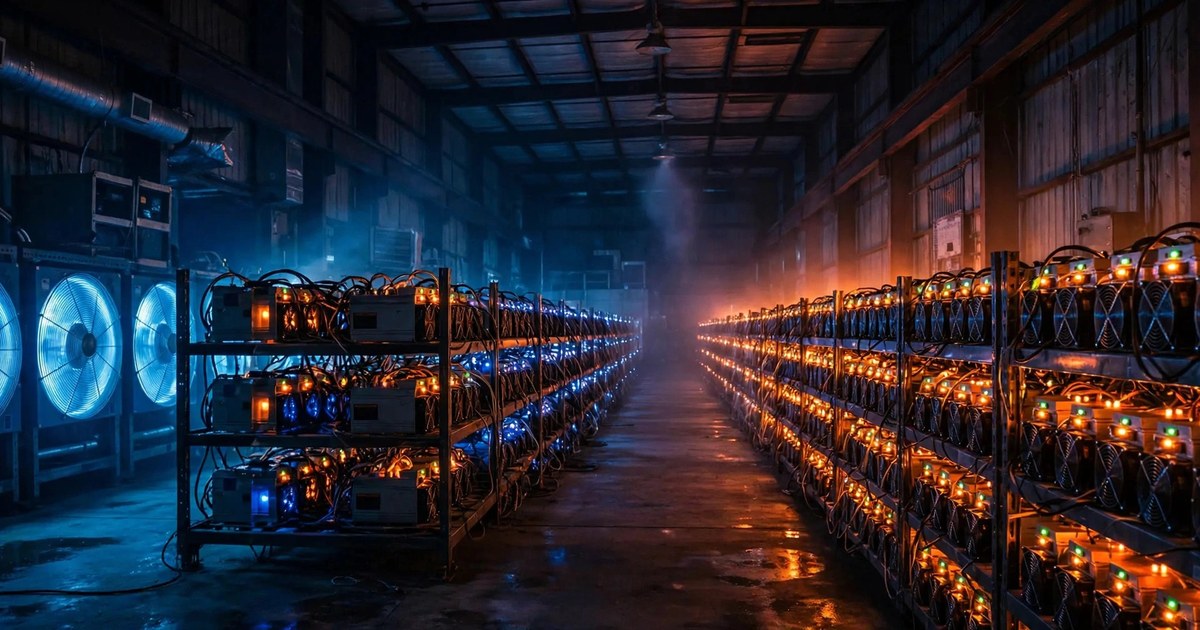
The $1.215 Billion Paradox
Bitcoin miners just posted their best month in almost a year — $1.215 billion in October revenue, the strongest monthly total since November 2025. And yet the number that actually pays a miner's bills fell off a cliff in the same month. Hashprice, the daily revenue earned by one petahash of computing power, dropped 17.5% in October, from $40.24 to $33.18 per PH/s per day. Total revenue went up. Revenue per machine went down. Both numbers are true, and understanding why is the difference between mining profitably and quietly bleeding money on your power bill.
This is the paradox at the heart of Bitcoin mining in November 2026: the network has never been more competitive, the pie has never been bigger, and each individual slice has never been thinner. Network hashrate has climbed back above 1,080 exahashes per second — more than one zettahash of machines competing for the same fixed reward. Two difficulty jumps in October, 5.92% on October 16 and 5.54% on October 29, pushed difficulty to 148.36 trillion. Every new machine that joins the network dilutes everyone else's share, and difficulty then rises to keep block times near ten minutes, locking the dilution in.
So is Bitcoin mining still profitable in November 2026? The honest answer is: it depends entirely on two numbers — how efficient your machine is, and what you pay for electricity. A modern sub-20 joules-per-terahash machine on cheap industrial power still clears a profit at today's hashprice. An older machine on a residential power tariff is already underwater. This article breaks down the real numbers, machine by machine, power price by power price, so you can check where you stand before you plug anything in.
What Hashprice Actually Means — and Why It Fell 17.5%
Hashprice is the simplest number in mining, and the most misunderstood. It measures the expected daily revenue for one petahash per second (PH/s) of SHA-256 computing power — one thousand terahashes per second, running continuously. It is set by four things: Bitcoin's price, network difficulty, the block subsidy, and transaction fees. In November 2026, three of those four are working against the individual miner.
Bitcoin's price fell about 7.3% during October, from the high-$80,000s region toward roughly $78,000. Because the block subsidy is fixed at 3.125 BTC per block, a lower Bitcoin price means fewer dollars per block. At the same time, hashrate recovered above 1,080 EH/s as idle capacity switched back on, and difficulty followed with two jumps of nearly 6% each. More machines chasing the same fixed number of bitcoins means less revenue per machine. That is the whole story of the 17.5% hashprice drop: the pie grew slightly in dollar terms because blocks arrived a little faster while hashrate outran difficulty, but the number of machines dividing it grew much faster.
Transaction fees, the fourth ingredient, offer almost no help. Fees contributed less than 1% of total miner revenue in the 24 hours before November 1 — roughly 0.45% by one measurement. The 3.125 BTC block subsidy supplies virtually all miner income. Until fees recover or Bitcoin's price rises substantially, hashprice will stay hostage to the difficulty ratchet: every efficiency gain by the industry as a whole becomes a revenue cut for each individual machine.
For context on how Bitcoin itself works, see our beginner's guide to What Is Bitcoin, and if you are new to owning BTC at all, our guide to buying Bitcoin in 2026 covers the basics before you think about mining it.
The Numbers That Decide It: One Machine, Three Power Prices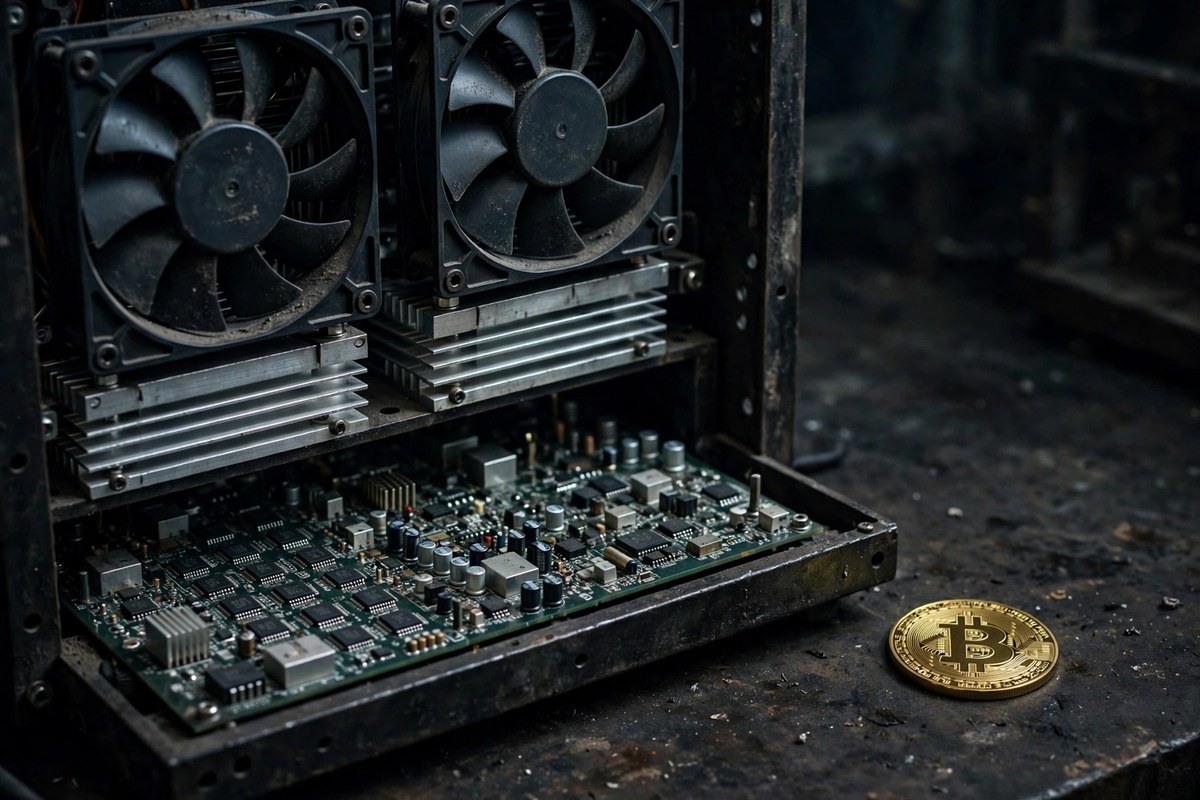
Take the workhorse of the last cycle, Bitmain's Antminer S21, rated at 200 TH/s and drawing about 3,500 watts. At the November 1 hashprice of roughly $33 per PH/s per day, that machine represents 0.2 PH/s, so it grosses about $6.60 a day before any costs. It consumes 84 kWh per day at rated power. The maths then depends entirely on your tariff:
- At 5 cents per kWh, electricity costs $4.20 a day, leaving $2.40 before pool fees, cooling, maintenance and the machine's purchase cost.
- At 6.5 cents per kWh, power costs $5.46 a day, leaving about $1.14 — and one independent analysis puts the S21's daily profit at 6.5-cent power at roughly $1.20, down from about $2.60 at the start of October, a fall of more than 50%.
- At 8 cents per kWh, power costs $6.72 a day — already more than the $6.60 gross. The machine loses money before a single other cost is counted. The electricity-only break-even for the S21 sits near 7.86 cents per kWh.
Now compare a modern flagship, the S23 XP Hyd at 600 TH/s and roughly 8.9 J/TH. The same hashprice drop cut its daily profit far less: from about $15.80 to about $11.60 at 6.5-cent power (down roughly 27%), and from about $19.50 to about $15.25 at 3.64-cent power (down roughly 22%). The lesson is brutal and simple: the cheaper your power and the more efficient your machine, the less a bad month hurts. The same 17.5% hashprice drop halved one miner's profit and merely dented another's.
Break-Even Table: What Each Machine Earns at $33 Hashprice
The table below uses the November 1 hashprice of approximately $33 per PH/s per day, before pool fees, cooling, hosting, downtime and hardware payback. Treat it as a screening tool, not a promise — actual payouts vary with pool terms, uptime and wall power draw.
| Machine | Hashrate | Daily gross | Power draw | Break-even power price |
|---|---|---|---|---|
| Antminer S21 (200 TH/s) | 0.2 PH/s | ~$6.60 | ~3,500 W | ~7.86 cents/kWh |
| Modern sub-20 J/TH fleet unit (200 TH/s class) | 0.2 PH/s | ~$6.60 | ~4,000 W or less | Lower draw lifts break-even, but efficiency is what matters |
| S23 XP Hyd (600 TH/s) | 0.6 PH/s | ~$19.80 | ~5,340 W at 8.9 J/TH | Stays profitable well above 10 cents/kWh |
The pattern is unmistakable. Older 25 J/TH equipment faces losses once electricity exceeds roughly 5–6 cents per kWh, while modern machines under 10 J/TH keep earning at tariffs that would bankrupt an older fleet. That gap is why the October difficulty jumps pushed more marginal capacity offline or into alternative uses — and why some operators are now repurposing capacity for AI computing instead. Contracted AI backlog across the mining sector now exceeds $100 billion, though only a fraction of that capacity currently generates revenue.
Why October Looked Great in the Headlines and Bad on Your Bill
October's $1.215 billion revenue figure is a network number, not a miner number. Total revenue is set by how many blocks are found, the reward per block and the price of Bitcoin. When hashrate rises faster than difficulty adjusts, blocks arrive slightly faster than the ten-minute target — October averaged roughly 9 minutes 52 seconds per block — and the pie briefly grows. Then difficulty catches up, each slice shrinks again, and the individual miner is left with less than before.
That is why the two numbers moved in opposite directions: total revenue rose to a 12-month high while revenue per petahash fell 17.5%. The same dynamic explains why some public miners report record quarters while smaller operators quietly shut machines off. Scale, power contracts and machine efficiency decide who survives a squeeze like this — not enthusiasm, and not the headline revenue figure.
There is a second trap in the headline number. The $1.215 billion is gross revenue distributed by the protocol, not profit retained by companies after electricity, machines, cooling, debt and hosting. Analysts attribute roughly 77% of hashprice variation over 14-day periods since the April 2024 halving to Bitcoin's price alone. If Bitcoin falls further in November, hashprice falls with it regardless of what difficulty does. Conversely, a Bitcoin recovery toward $85,000 would lift hashprice roughly in proportion, even at current difficulty.
5 Checks Before You Mine — or Keep Mining — in November 2026
Before you buy a machine, sign a hosting contract or keep an old rig running, run through this checklist honestly:
- Measure your wall power draw, not the nameplate rating. Cooling and power-distribution losses raise effective energy costs above the spec sheet.
- Calculate your all-in power price, including delivery charges, demand fees and hosting markups — not just the generation rate on your bill.
- Check your machine's efficiency in joules per terahash at the wall. Above 20 J/TH, you need sub-6-cent power to survive at $33 hashprice.
- Stress-test at $28 hashprice, not $33. Another difficulty jump or a Bitcoin dip to the mid-$70,000s would take hashprice there quickly.
- Price in the machine's payback, not just its daily margin. A machine earning $1.20 a day after power takes years to repay its purchase price — and difficulty will not wait.
And once you hold Bitcoin, however you obtained it, keeping it safe matters as much as earning it. Our guide to storing crypto safely in 2026 covers cold storage, seed phrases and wallet security — the step too many new miners skip.
What Most People Get Wrong About Mining Profitability
The most common mistake is confusing revenue with profit. A machine "earning" $6.60 a day is not making $6.60 — it is grossing $6.60 before the power bill, pool fee, cooling, downtime, repairs and the capital cost of the machine itself. The second mistake is extrapolating a good month. Hashprice started October at $40.24 and ended it at $33.18; anyone who bought a machine on October's opening numbers watched their expected payback stretch by nearly a fifth in thirty days. The third mistake is ignoring difficulty. Difficulty has risen twice in a month and will rise again as long as hashrate keeps climbing — every miner's revenue is on a slow escalator downward unless Bitcoin's price rises faster than difficulty does.
The contrarian read, though, is worth stating: squeezes like this are also when the next cycle's winners position themselves. Efficient operators with locked-in cheap power are accumulating machines and hashrate while marginal operators exit. When Bitcoin's price eventually recovers — or when the next difficulty plateau arrives — the survivors own a larger share of a network that pays the same fixed subsidy. Mining has always been a game of surviving the squeeze, not avoiding it.
What Happens Next: Three Scenarios for November
Bull case: Bitcoin reclaims $85,000 and holds it. Hashprice climbs back toward $38–40 per PH/s per day, older machines return to profitability at moderate power prices, and the squeeze pauses until the next difficulty jump.
Base case: Bitcoin trades sideways between $76,000 and $80,000 while hashrate keeps rising. Hashprice drifts toward $30, marginal fleets shut down in waves, and difficulty eventually plateaus as the weakest capacity exits — stabilizing revenue for the survivors.
Bear case: Bitcoin breaks below $76,000 toward the mid-$70,000s. Hashprice falls toward $28 or lower, machines above 20 J/TH go dark almost everywhere except the cheapest power regions, and public miners accelerate their pivot to AI hosting revenue. For anyone considering buying a machine, the bear case is the one to underwrite — not the bull case.
For the wider market context, Bitcoin is currently holding near $78,000 after the Binance hack fallout, with traders watching Tuesday's US midterm elections and Friday's jobs report — events that could move Bitcoin's price, and therefore hashprice, in either direction within days. Our recent coverage of Bitcoin's $77,140 line and the levels that decide November tracks the price levels that matter most for miners right now.
Frequently Asked Questions
Is Bitcoin mining profitable in November 2026?
For efficient machines on cheap power, yes — but margins are thin. At roughly $33 hashprice, a modern sub-20 J/TH machine on sub-6-cent power earns a positive daily margin, while older machines on residential tariffs lose money. Profitability is decided by your machine's efficiency and your power price, not by the headline $1.215 billion industry revenue figure.
What is hashprice and why did it fall 17.5% in October?
Hashprice is the expected daily revenue per petahash of computing power. It fell from $40.24 to $33.18 per PH/s per day in October because Bitcoin's price dropped about 7.3% while hashrate climbed above 1,080 EH/s and difficulty jumped 5.92% and then 5.54%, spreading the same fixed block reward across more machines.
How much does one Antminer S21 earn per day now?
At about $33 hashprice, a 200 TH/s S21 grosses roughly $6.60 a day before costs. At 5-cent power it keeps about $2.40 after electricity; at 8-cent power it loses money before any other cost. Its electricity-only break-even is approximately 7.86 cents per kWh.
What power price do I need to mine profitably?
It depends on your machine. Older 25 J/TH equipment needs power below roughly 5–6 cents per kWh at current hashprice. Modern machines under 10 J/TH remain profitable at considerably higher tariffs. Always calculate with your all-in power price, including delivery and hosting fees.
Do transaction fees help miners much right now?
Barely. Fees contributed less than 1% of miner revenue around November 1. The 3.125 BTC block subsidy supplies virtually all income, which is why Bitcoin's price and difficulty matter far more than fee levels at present.
Should I buy a mining machine now or wait?
Only if you have locked-in cheap power and an efficient machine whose payback works at $28 hashprice, not just $33. If your case only works at today's hashprice or requires Bitcoin to rally, waiting — or simply buying Bitcoin directly — is the lower-risk choice. Our Bitcoin buying guide compares the direct route.
Conclusion
October 2026 will be remembered as the month Bitcoin miners earned the most money in a year — and the month each individual machine earned 17.5% less. That contradiction is not a data error; it is the mining business working exactly as designed. The subsidy is fixed, the competition is not, and difficulty exists to make sure no one keeps an easy margin for long.
If you mine, or plan to, stop watching the industry revenue headlines and start watching three numbers: hashprice, your machine's joules per terahash, and your all-in power price. At $33 hashprice, efficient machines on cheap power still earn. Everything else is waiting for a Bitcoin rally to bail it out — and hope is not a mining strategy. Check your numbers before November's next difficulty adjustment does it for you.
Sources: CoinTribune, ASIC.tools, BitcoinVersus, CryptoGuideGH, CoinDesk, KuCoin Daily Market Report.